

Press Release | 2 October 2026
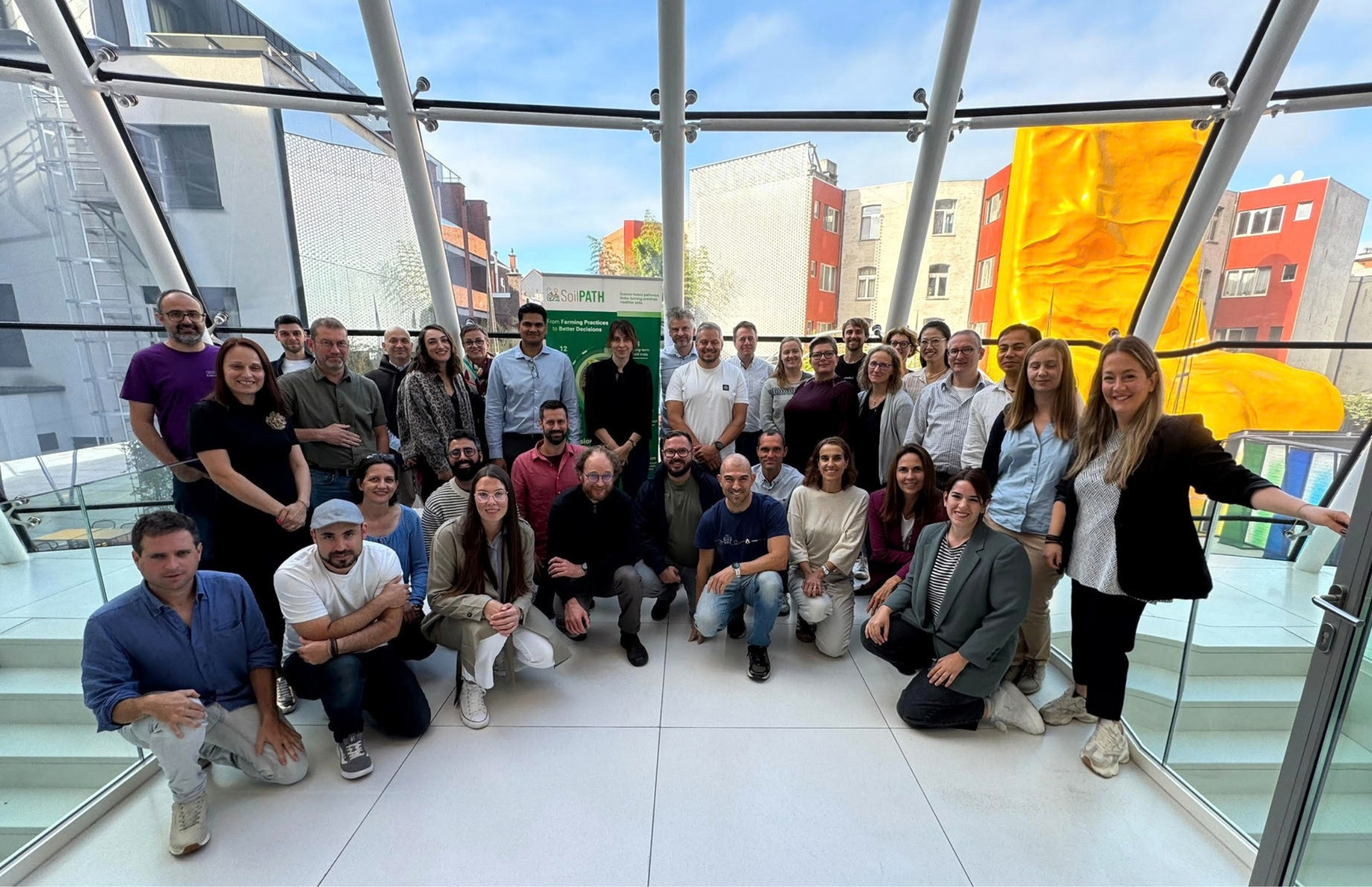
The Horizon Europe project SoilPATH – SOIL Practices Assessment and Transition for Health brought together its European consortium for a two-day kick-off meeting on 22–23 September 2026 in Ghent, Belgium.
Coordinated by Ghent University, the five-year Horizon Europe project will assess how farming practices, individually and in combination, affect soil health and farm performance, and translate the evidence into practical tools for farmers, advisors and policymakers.
Reflecting on the kick-off meeting, Prof. Erik Meers, Ghent University, SoilPATH Project Coordinator, said: “What stood out to me during the kick-off was how quickly we connected, both professionally and socially. We learned from each other, exchanged knowledge and ideas, and saw the strength that comes from the consortium’s diversity. I believe we have all the right ingredients in place to make SoilPATH a success over the next five years.”
The programme introduced the different areas of work that will shape SoilPATH over the coming years, from multi-actor engagement and the assessment of individual farming practices to the study of trade-offs and synergies between combined practices, soil-health assessment and opportunity mapping across Europe, practical tools for farmers and policymakers, and project communication and exploitation.
The meeting also provided an important opportunity for partners to exchange perspectives, connect expertise and build the common direction needed for effective collaboration throughout the project.
A European effort for healthier soils
SoilPATH is a five-year Horizon Europe Research and Innovation Action, running from 1 September 2026 to 31 August 2031, under the topic “Quantifying the impact of farming practices on soil health in arable lands.”
The project brings together 17 partners from 11 European countries and will work across eight main European pedoclimatic zones through 12 Multi-Actor Working Groups. Its research will also draw on 24 existing long-term field trials across four European pedoclimatic zones.
At the heart of SoilPATH is a major challenge for European agriculture: understanding which farming practices work best for soil health, where they work, and under which conditions.
SoilPATH will develop a harmonised European approach to assess how individual and combined farming practices affect soil health and farm performance and translate that knowledge into practical tools and recommendations.
The project will examine farming practices across three main areas: Crop Rotation & Ground Cover, Fertilisation & Organic Matter Management, and Tillage.
Pilar Vizcaíno Martínez, SoilPATH’s Project Officer at the European Research Executive Agency (REA), took part in the Kick-off Meeting alongside representatives of the Joint Research Centre and the Directorate-General for Agriculture and Rural Development. Reflecting on the project’s launch, she said: “I am really glad to be the Project Officer of the SoilPATH project and support its enthusiastic consortium in its aim to fill an important knowledge gap by connecting individual or combined farming practices with soil indicators. Looking forward to seeing how the results of this Mission Soil project effectively support both farmers and policymakers with practical tools and evidence and contribute to key EU priorities such as the CAP and the Soil Monitoring Law.”
From evidence to practical solutions
Expected outputs include a European multi-actor network and Soil Health Knowledge Base, evidence on individual and combined farming practices, soil-health and opportunity maps, practical decision-support resources for farmers and advisors, and tools supporting evidence-based policymaking.
Through its SoilPATHways Knowledge & Tools Hub, the project will also provide a central point of access to practical knowledge, tools and resources for field actors and policymakers.
Science-Based Pathways · Better Farming Practices · Healthier Soils